As part of its ambition to rebalance nitrogen (N) and phosphorus (P) flows across Europe, NPower is demonstrating six
pilot technologies that recover nutrients from different waste streams and transform them into high-value recovered fertilisers.
One of these pilots is led by JISAP, a pig farming company based in the Region of Murcia with direct experience in livestock
production and manure management. The pilot combines biological treatment and nanobubble technology to improve the quality
and agronomic value of pig manure.
From livestock waste to recovered fertilisers
The pilot is being demonstrated at a commercial pig farm, where around 5,000 m³ of manure are produced every year.
Rather than treating manure as a waste to be disposed of, the technology aims to transform it into safer, more efficient
fertilising products with a lower environmental footprint.
The process combines two complementary technologies. First, specially selected natural bacterial cocktails biologically
treat the manure, degrading organic matter, improving its handling, and optimising key processes such as nitrification and
denitrification. Afterwards, nanobubble systems further improve the physicochemical characteristics of the liquid fraction,
enhancing its suitability for agricultural use.
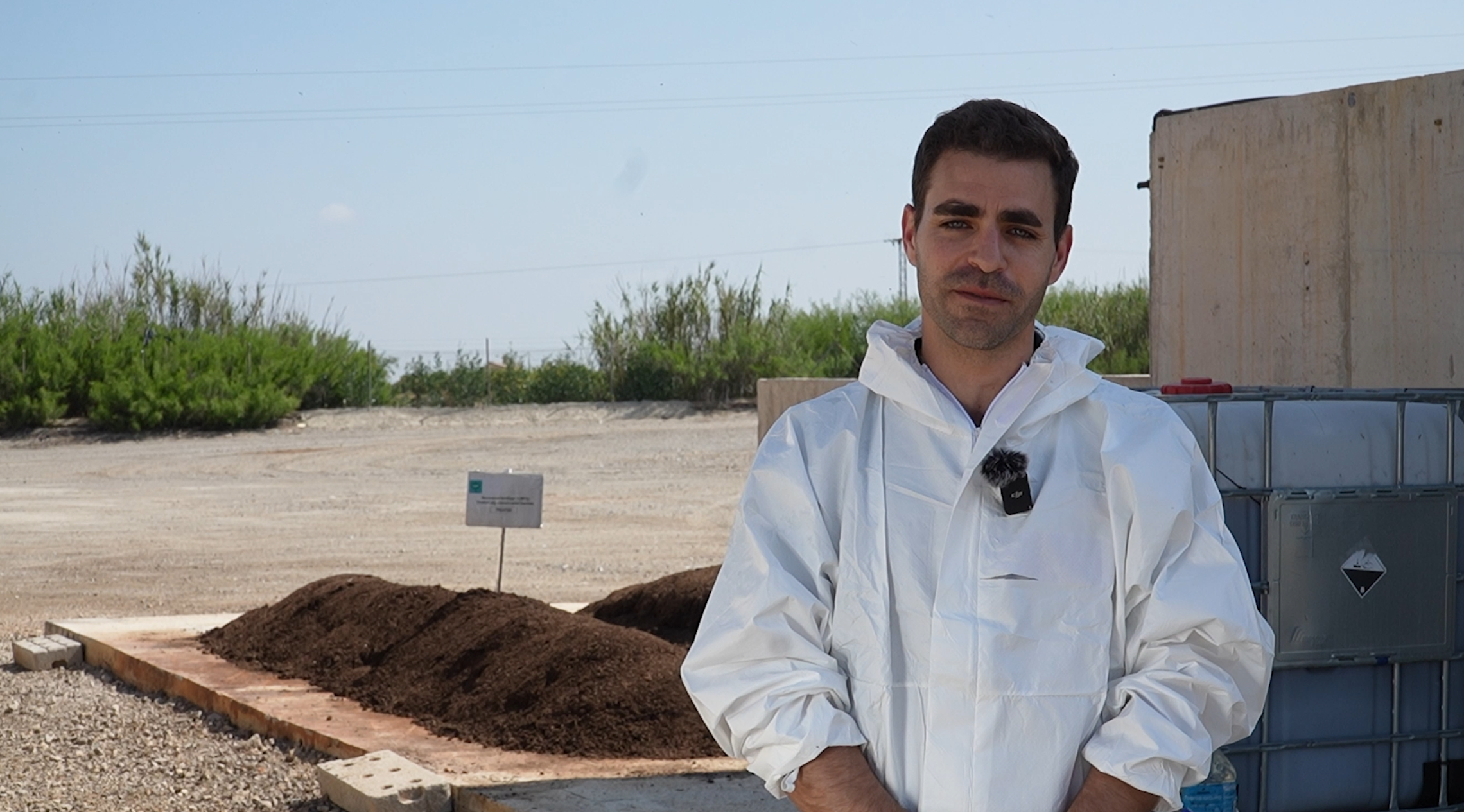
As David Mena, Veterinary Technician at JISAP, explains:
“The objective of this technology is to biotransform this waste into an efficient and safe by-product, with proven fertilising
value and a reduced environmental footprint.”
Three recovered fertilisers from a single waste stream
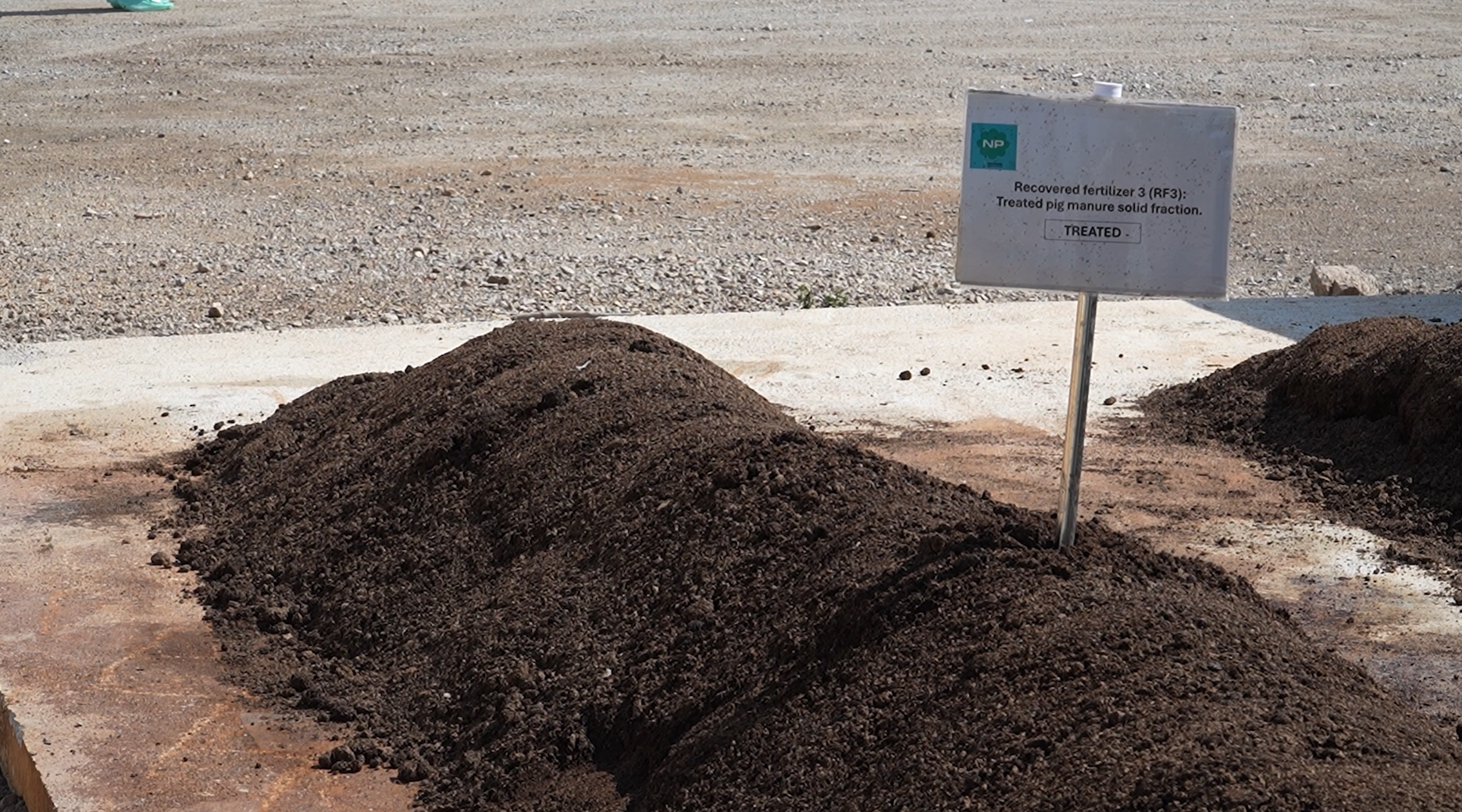
Through this integrated treatment process, the pilot produces three recovered fertilisers, each designed for different agricultural
applications:
- A biologically treated solid fertiliser.
- A liquid fertiliser with reduced total nitrogen, optimised for irrigation.
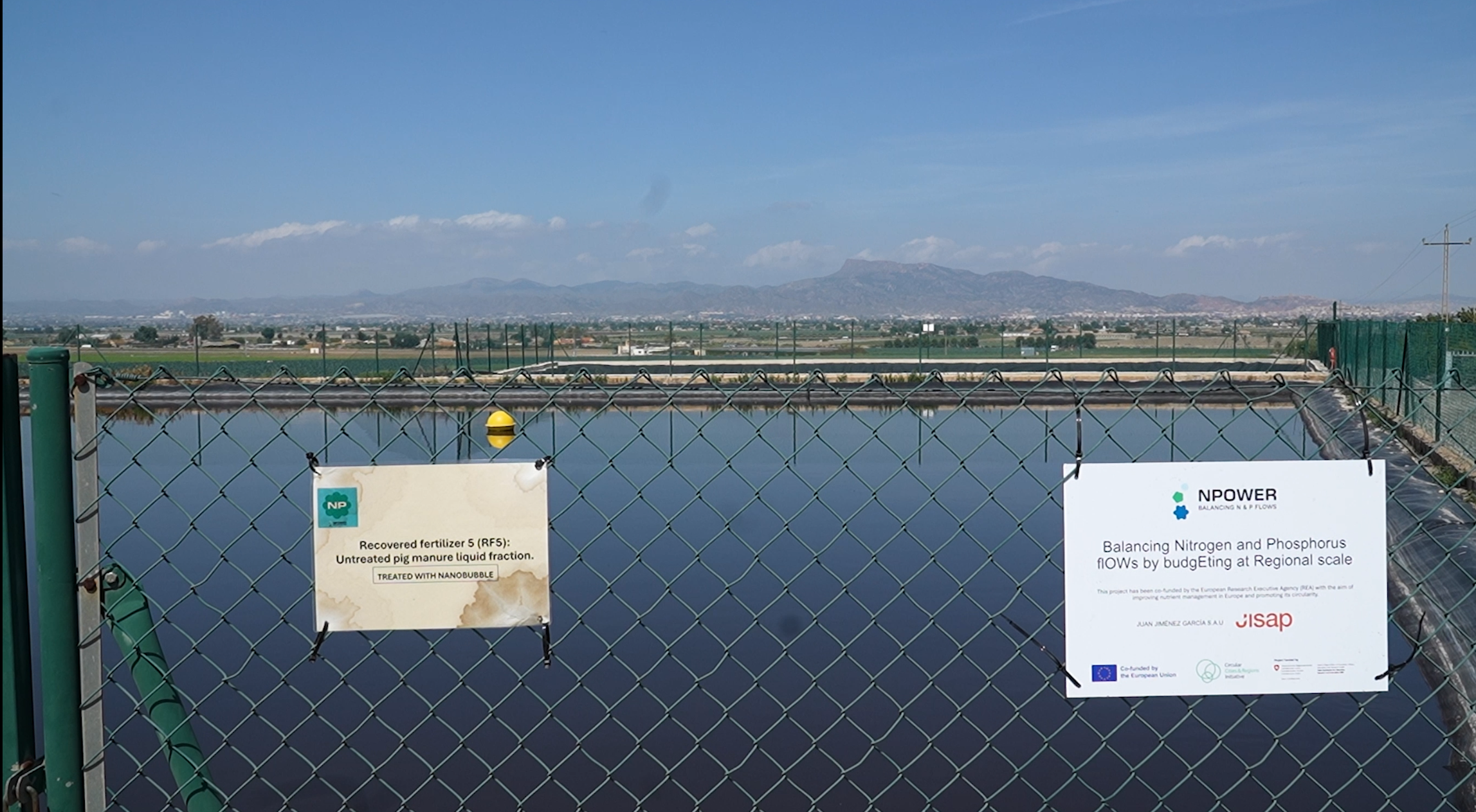
- A nutrient-rich liquid fraction treated with nanobubble technology to improve its management and application through irrigation systems.
By recovering and optimising these nutrient streams, the pilot increases the value of pig manure while making it easier and safer to manage.
Benefits beyond manure treatment
The pilot contributes to several environmental and agricultural objectives.
According to David Mena, the technology is expected to reduce greenhouse gas emissions by around 20–30%, decrease the need for external
mineral fertilisers, and convert livestock waste into valuable fertilising products with a lower environmental footprint.
Beyond these technical improvements, the pilot also demonstrates how livestock production can become an active part of a circular nutrient
economy, where waste streams are transformed into resources that remain within the agricultural system.
As NPower progresses, the results of this pilot will contribute to validating innovative nutrient recovery technologies and recovered fertilisers
that support more sustainable nutrient management across Europe.
Watch the video below to discover how this NPower pilot is helping transform pig manure into valuable agricultural resources.
Play